


12 Blog Posts for Marketers Who See Their Customers Face to Face
A working library of ideas for marketers using giveaways, games, prizes, sports promotions, festivals, trade shows, and brand activations to create in-person interaction.
Giveaways
Brand Activations
Sports
Festivals
When Customers Are Physically in Front of You, Everything Changes
Digital marketing gives brands enormous reach.
But some marketers still have a very different advantage: they are standing in the same room as the customer.
They see the reaction.
They hear the question.
They watch someone stop walking, lean into a booth, try a game, pick up a product, ask a salesperson for more information, or pull a friend over to see what is happening.
And that makes face-to-face marketing a particularly useful environment for experiential ideas, interactive games, giveaways, prizes, sports promotions, festivals, trade shows, and brand activations.
The challenge is figuring out what to do with that opportunity.
The 12 articles below cover different parts of the problem—from choosing a prize people actually want to win to creating a trade show crowd, building a prize-wheel interaction, using poker chips in unexpected ways, and designing activities around sports and beer festivals.
Think of them as a working library for marketers who meet their customers in person.
Start With the Prize: Give People a Reason to Care
A giveaway can be an afterthought. Or it can be the reason someone stops.
That difference begins with the prize itself.
If the prize feels generic, the giveaway may blend into everything else happening around the event. If the prize is visible, relevant, desirable, or connected to the audience, it can create anticipation before anyone has even won.
The right prize can also change the way the surrounding interaction works.
- A marketer can build a game around it.
- A booth can use it to create a reason for conversation.
- A sponsor can use it to create a larger moment around the brand.
- And a prize can continue working after the event if the winner actually uses it.
For marketers thinking through that first question—“What should we give away?”—start with giveaway prize ideas.
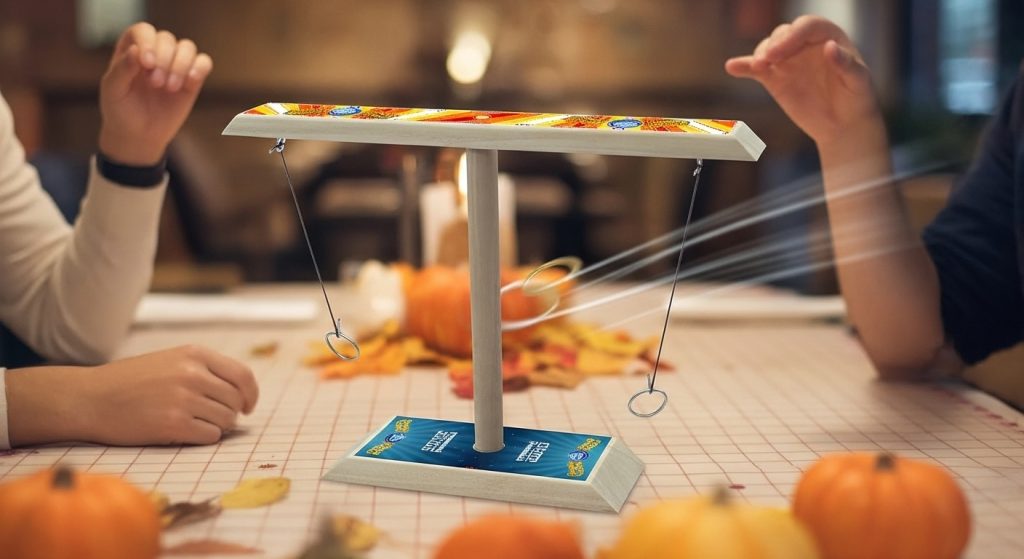
What would make someone want to participate?
The more useful question is not simply what a company can afford to give away.
What would make someone want to participate?
When the Environment Is a Trade Show, Design for the Stop
Trade shows create a very particular face-to-face marketing problem. Everyone is moving. Everyone is surrounded by competing messages. Everyone has somewhere else to go.
Give the attendee a reason to stop.
A booth has only a short window to convince someone that it is worth stopping.
That makes the physical experience important.
- A game can provide a reason to pause.
- A visible challenge can create curiosity.
- A competitive activity can give a sales team something to talk about.
- And a recognizable physical object can help a booth look different from the standard backdrop-and-brochure setup.
For marketers looking for a broader range of ideas, top promotional game ideas for trade shows and brand activations is a useful starting point.
The important thing is not simply choosing a game.
It is matching the game to the behavior you want.
Do you want someone to stop?
Stay?
Compete?
Talk to a salesperson?
Bring over a colleague?
Remember the booth afterward?
The answer changes the activation.
If You Need a Crowd, Build Something Worth Watching
Participation and observation are not opposites.
In fact, one can create the other.
Someone starts playing. Another person watches. A third person asks what is happening.
A friend gets pulled into the activity. A small group forms around the interaction.
Someone Starts Playing
Another Person Watches
A Third Person Asks What Is Happening
A Friend Gets Pulled Into the Activity
A Small Group Forms Around the Interaction
That is one reason interactive games can work particularly well in a crowded trade show environment.
The activity itself becomes a visual signal.
It tells everyone nearby:
**Something is happening here.**
That makes interactive promotional games that turn trade show booths into crowd magnets especially relevant when the problem is not just engagement, but visibility.
A booth does not necessarily need the biggest display.
It needs something that people can understand from the aisle.
And ideally, something that looks interesting enough that watching for a few seconds makes someone want to try it.
Use a Prize Wheel When You Need Instant Understanding
Some interactions have an advantage because people understand them immediately.
A prize wheel is a good example.
You do not have to explain what a wheel is.
People know what happens next.
They spin it.
The wheel determines an outcome.
They win something, unlock something, receive a reward, or discover what happens next.
prize wheel ideas are useful when the goal is to build a simple, visible interaction around a reward.
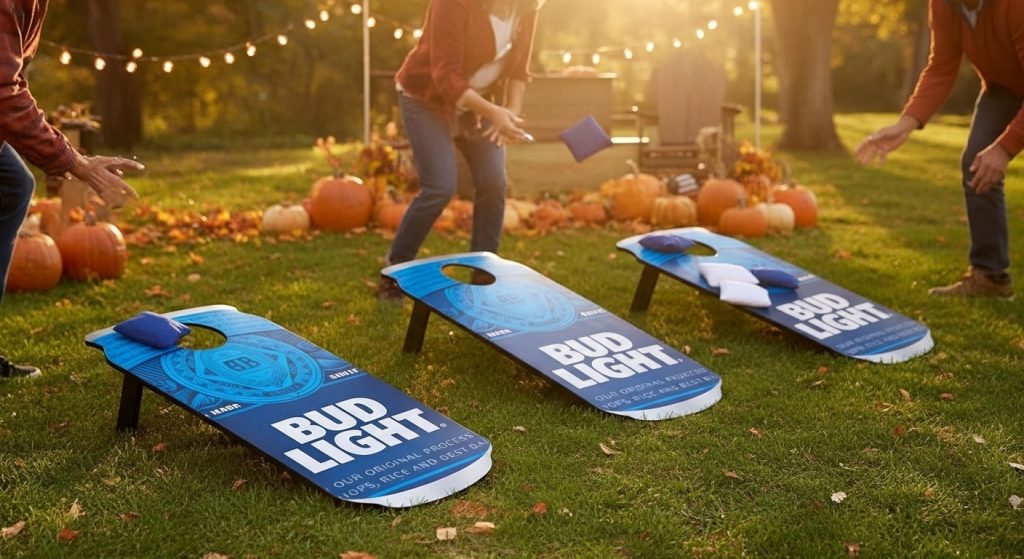
The simpler the mechanic, the faster the participation decision.
That simplicity can be useful in busy environments where people do not want a complicated interaction.
A wheel can also create a small audience around every spin.
Someone spins.
People watch.
The result becomes part of the moment.
The wheel itself does not need to carry the entire marketing strategy.
It simply needs to make participation easy.
The brand can then build the surrounding experience around that moment.
Turn the Giveaway Into the Game
There is another way to think about giveaways.
Instead of:
Play → maybe win a prize
The prize is part of why the activity is worth playing.
That distinction creates a stronger connection between participation and reward.
The prize becomes part of the game.
The game becomes part of the promotion.
And the promotion becomes part of the brand experience.
That is the thinking behind giveaway game ideas.
The reward becomes part of what makes the activity worth trying.
The interaction can become more consequential than a passive giveaway.
The giveaway itself becomes part of the experience.
This approach is especially useful when the marketer wants the prize to do more than sit on a table.
The reward can create anticipation.
It can encourage repeat attempts.
It can make a simple activity feel more consequential.
And it can turn the giveaway itself into part of the entertainment.
Sometimes the best activation is the one everyone knows how to play.
When the Audience Wants Something Familiar, Use Carnival Mechanics
Not every event needs a complex activation.
Sometimes the appeal comes from something familiar.
Carnival-style activities work because people already understand the basic idea of a game booth.
- They know what a target is.
- They know what a ring is.
- They understand the concept of throwing, tossing, hitting, knocking something down, or trying to beat a challenge.
That familiarity lowers the barrier to participation.
It also creates an environment where multiple activities can coexist.
A larger event can use several game types.
A sponsor can build a recognizable zone.
A festival can create multiple points of engagement.
And a brand can customize the experience visually without having to reinvent the basic mechanics.
For marketers looking at that wider category, best carnival games is a useful place to explore the possibilities.
Sometimes the best activation is not the most complicated one.
It is the one everyone knows how to play.
A Small Object Can Have a Surprisingly Large Marketing Role
Not every promotional interaction has to be built around a large game.
Sometimes the interesting part is how a small object gets used.
The object is familiar. It fits in a hand. It can carry information.
It can represent value, access, a challenge, a reward, a code, a conversation prompt, or another part of an event mechanic.
That flexibility makes creative use cases for trade show poker chips worth considering when a marketer wants something more flexible than a traditional giveaway.
Do not assume the physical size of a promotional item determines the size of the experience.
A small object can become part of a much larger interaction.
Build Activations Around the Occasion
Face-to-face marketing works best when the experience feels connected to why people are there.
An activation at a trade show should feel different from one at a festival.
A sports event should feel different from a customer appreciation event.
A summer promotion should feel different from a corporate conference.
That does not mean reinventing everything.
It means giving the physical experience a reason to belong.
For marketers planning around seasonal or event-specific campaigns, interactive brand activation ideas for July 2026 provides another example of thinking about activation ideas through the lens of a specific occasion.
Make the physical experience have a reason to belong.
What would make sense here?
Not just:
What can we put a logo on?
The more naturally the activity fits the event, the less it feels like an interruption.
Sports Marketers Have an Advantage: The Audience Already Likes Competition
Sports audiences do not need to be taught why competition is interesting.
They already understand the concept.
They know what it means to beat a score.
They know what it means to challenge a friend. They know how to watch someone attempt something difficult.
That gives sports marketers a natural foundation for interactive promotions.
And the interaction can happen before the game, around the venue, at a tailgate, or inside a larger fan experience.
For marketers working specifically in that environment, custom items for sports team giveaways is a useful resource for thinking about what belongs in a sports-focused promotional strategy.
The key is to make the item relevant to the audience.
Sports fans already have a reason to care.
The activation should build on that.

Let the environment dictate the interaction.
Festivals Change the Rules
A trade show booth and a beer festival may both involve face-to-face marketing, but the environment is very different.
Festival audiences are often more social.
People may be moving in groups.
They may be stopping casually rather than working their way through a floor plan.
They may be there for entertainment first and marketing second.
That means the activity needs to feel like entertainment.
It should be understandable.
It should be visible.
It should accommodate people arriving at different times.
And it should work even when someone only participates for a few minutes.
For that environment, explore beer festival games that keep crowds engaged.
The broader idea goes beyond beer festivals.
Whenever the audience is there primarily to socialize, a good branded activity should feel like something they would want to do anyway.
That is when promotion starts to disappear into the experience.
Use a Game That Creates Anticipation One Second at a Time
Some games work because people cannot help but watch the result.
That pause is valuable.
The audience is watching because the outcome is not known yet.
That creates a miniature suspense moment.
Drop to Win is an example of that kind of physical interaction.
Movement can create attention, but uncertainty can create anticipation.
When people are waiting to see what happens next, they are more likely to watch.
And when other people are watching, participation can spread.
This is useful when the marketer wants an activity to work for both players and spectators.
A Simple Throwing Game Can Become a Branded Gathering Point
There is a reason simple games keep appearing in effective event marketing.
They are easy to understand.
They create visible action.
They work for different skill levels.
And people can often watch without needing to participate immediately.
Ring toss is a good example.
The basic mechanic is familiar.
The visual objective is obvious.
And a branded ring toss can fit into event environments where a large or complicated installation would not.
Simple mechanics can create a reason to gather.
For marketers interested in that specific format, custom ring toss games provides a focused look at how a familiar game can become a branded interaction.
The lesson is bigger than ring toss.
A good face-to-face marketing experience does not necessarily require a novel mechanic.
Sometimes the better strategy is to take something people already understand and make the brand part of the reason they want to play.
What These 12 Articles Have in Common
These resources cover different environments and different physical experiences.
But the strongest ideas share several characteristics.
They Give People Something to Do
Face-to-face marketing becomes more interesting when the audience has an action to take.
Play.
Spin.
Throw.
Compete.
Choose.
Win.
They Make the Brand Part of the Environment
The most useful promotional experiences do not simply place a logo nearby.
They put the brand on or inside something people are interacting with.
They Create Reasons to Watch
A person does not always have to participate immediately.
Sometimes watching is the first step.
That means the experience can generate its own attention.
They Create Natural Conversation
A game produces an obvious opening:
Want to try?
That is a much easier conversation starter than handing someone another piece of collateral.
They Fit the Environment
The best trade show activity is not necessarily the best festival activity.
The best sports promotion is not necessarily the best customer appreciation idea.
Context matters.
The Face-to-Face Marketer’s Advantage
Digital channels are exceptionally good at getting messages in front of people.
Face-to-face marketing has a different advantage.
You can see what happens next.
That makes physical marketing unusually useful for learning.
The event becomes a live test of the experience.
And the marketer gets to watch the entire progression:
Notice → stop → understand → participate → interact → remember.
Different Articles Solve Different In-Person Problems
The 12 resources above approach different parts of that progression.
Use the prize-focused articles when the reward is the main attraction.
Use the trade show resources when stopping power and booth engagement matter.
Use the sports and festival resources when the environment dictates the experience.
Use the individual game resources when you already know the type of interaction you want and need to think through how it can work as a branded activity.
When the reward is the main attraction.
When stopping power and booth engagement matter.
When the environment dictates the experience.
When you already know the type of interaction you want.
When your customers are physically in front of you, give them something worth doing.
“Highly Recommend!”
“First time using this supplier and WOW are we happy. We did a self-promo of their Tailgate Cornhole and their Fast Four game. They are beautiful and they arrived in under 2 weeks… to Canada! Ordering was very easy, uploading our very large artwork file was easy, and dealing with them has been a breeze. Jackie, the account manager, is helpful and great to deal with. Highly recommend.”
– A Satisfied Client
“Hidden Gem of a Supplier!”
“I am totally wowed by their customer service. Quick responses, patient artwork services, and much faster than quoted production. I don’t mean to sound arrogant, but it’s rare that a supplier treats us better than we treat our customers. I often have the thought, ‘wow…if I treated my customers this way….’ With this supplier, those same words are going through my head, but I’m thinking we need to step up our game. As I was getting impatient on our 8th round of artwork (we turned it over to them at round 5), they were kind and responsive and just got it done. Hidden gem of a supplier I had no idea existed. Thanks—well done.”
– A Happy Customer
“Fastest Shipping Ever!”
“This is THE supplier for cornhole boards!! Friendly, quick response, and received an art proof the same day. Shipping was FAST and I mean FAST. Received the order two days after placing it. From sending the artwork to customer receiving the product was 4 business days.”
– Thrilled Customer
SPECIAL OFFER
Get your logo mocked-up on ALL of our promotional products and games, for free!
Email us (Promotoss) a logo and we will create a mockup for you. We are a SAGE, asi and PPAI member, please have your vendor numbers available so that we may connect. To receive promotional product mockups, please make sure all fields on contact form are filled. That being said, we do not send spam and will be contacting you for the purpose of direct sales. Your information will not be provided to third parties and it will only trade through a few hands.