
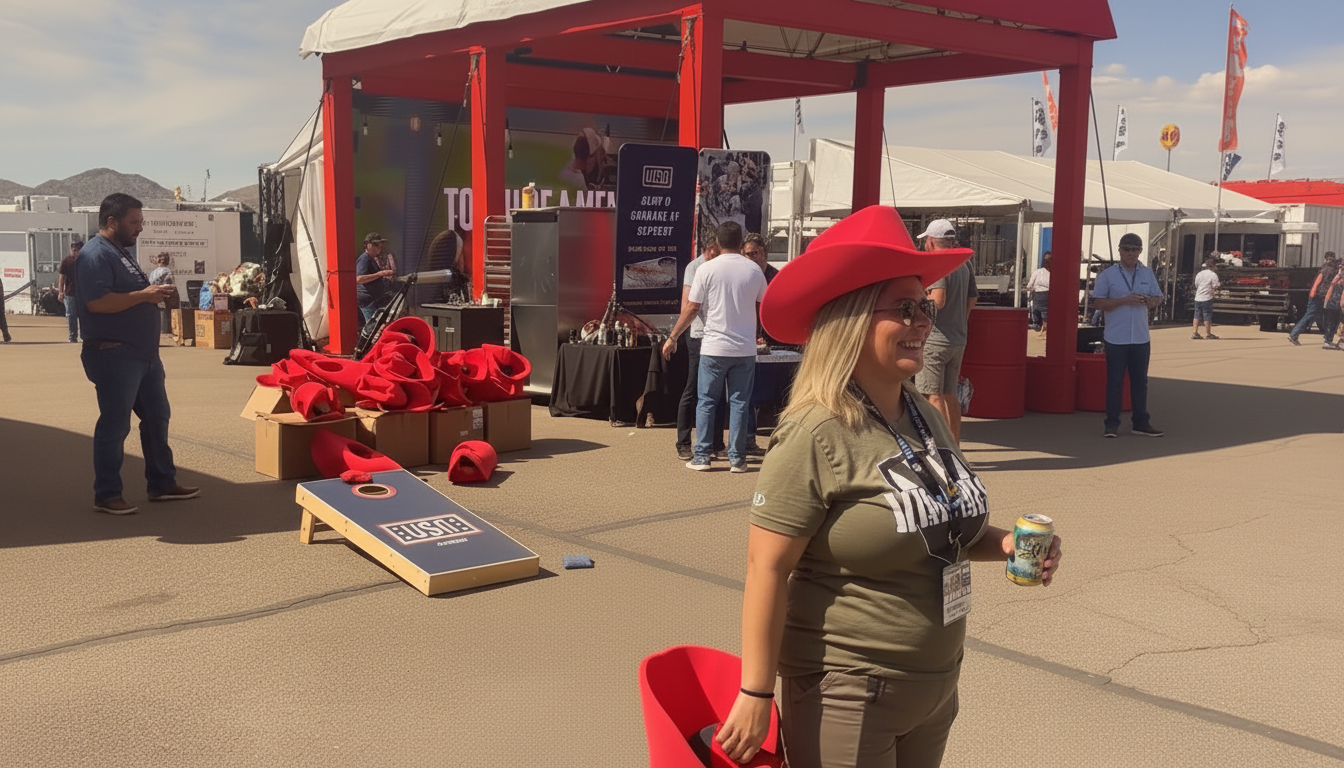

Tailgates, Beer Festivals, Oktoberfest & Outdoor Bar Events
Building Better Outdoor Brand Activations for Tailgates, Beer Festivals & Bar Events
Fall outdoor events already have the social energy. The opportunity for a brand is to become part of that energy with an activity people can see, gather around, play and talk about.
Beer Festivals
Oktoberfest
Outdoor Bars
Tailgates
Turn parking lots, fan zones and pre-game gatherings into branded activity areas.
Beer Festivals
Give guests something to do between tastings, conversations and entertainment.
Oktoberfest
Use familiar communal games that fit the atmosphere without overcomplicating the experience.
Outdoor Bars
Activate patios, lawns and hospitality areas with games people can play while socializing.
Introduction — Outdoor Events Are Built for Interaction
Outdoor Events Already Have the Energy
Tailgates, festivals and outdoor bars are social environments before a brand ever arrives. That makes them unusually useful places to build an activation around participation.
People are already moving through these spaces in groups. They are meeting friends, watching sports, talking with coworkers, visiting vendors, sharing food, spending time outdoors and deciding where to stop next. Unlike a traditional display environment, the audience is not necessarily waiting for a brand to tell them what to do.
The challenge is giving them a reason to choose your space anyway.
Games provide a straightforward answer. A recognizable activity can create a physical gathering point without requiring the brand to interrupt the event. Instead of asking attendees to stop and listen to a pitch, the activation can give them something to do first. A toss game, competition, target challenge or larger-format lawn game can become part of the rhythm of the event.
For marketers and promotional-product professionals, that changes the role of the branded product. The game is no longer just merchandise with a logo. It becomes part of the environment and part of the experience the audience is already there to enjoy.
That is especially relevant during the fall calendar, when tailgates, Oktoberfest celebrations, brewery events, outdoor hospitality and seasonal gatherings overlap. The opportunity is not to force a brand into those environments. It is to design an activity that feels like it belongs there.
For a broader look at games that work in casual social settings, explore tailgate party games for the office and the larger range of branded outdoor activities.
Why October and November Matter
Fall Is a Natural Time to Build Outdoor Brand Experiences
October and November bring together a useful mix of event environments: football-season tailgates, fall festivals, Oktoberfest programming, brewery gatherings, customer events, employee outings and the beginning of year-end hospitality activity. The same basic principles can be adapted across all of them.
Tailgates & Fall Festivals
Competition, social gathering and outdoor entertainment create natural opportunities for branded games to become activity anchors.
Oktoberfest & Biergarten Events
Communal, easy-to-understand games fit naturally into brewery and festival environments where groups move between food, drinks, music and activities.
Customer & Employee Events
As the calendar moves toward year-end, branded games can give customer appreciation gatherings, corporate events and hospitality programs another layer of shared interaction.
01 / Tailgate Activations
Turn the Tailgate Into a Branded Gathering Point
Tailgates are built around a simple combination: people, competition, food, conversation and time spent waiting for the main event.
That makes the pre-game and parking-lot environment a natural setting for branded games. The activation does not have to compete with the sporting event. It can complement the social experience that happens before it.
Team-oriented competition is an especially natural fit. A game can give two people something to compete over while a larger group watches and waits for the next turn. That creates a small audience around the activity, and that audience can become part of the brand environment even when everyone is not actively playing.
Placement matters too. A branded game should function as a gathering point, not an obstacle. Positioning near the areas where people are already stopping can help connect the game to the existing flow of the tailgate.
Giveaways can then be layered into gameplay. Instead of simply distributing a promotional item, the campaign can use participation as the moment that leads to the promotional reward. The exact mechanic can vary, but the underlying idea remains the same: the game creates the interaction and the giveaway becomes part of that interaction.
Explore tailgate giveaways and tailgate promotional items as part of the larger experience.
Make the Game-Day Gathering Part of the Brand Experience
Tailgate Design Considerations
Build Around the Social Rhythm
Not every tailgate needs the same game. The useful question is what happens around the activity: are people moving through quickly, gathering for long stretches, or looking for something competitive to do before the game begins?
Choose an activity that people can understand quickly as they approach the activation.
Use formats that naturally support head-to-head play or small-group challenges.
Let the game define a clear area where players and spectators can comfortably gather.
Connect promotional rewards to participation instead of relying entirely on passive distribution.

Give Guests Something to Do Between Tastings
02 / Beer Festivals & Brewery Events
Turn the Beer Festival Into a Playable Environment
Beer festivals and brewery events already encourage people to move around, socialize and discover something new. Games give that movement another destination.
Between tastings, food stops and conversations, a branded game can create a compact activity zone where guests can gather. The most useful formats are easy to enter and easy to watch. A person should be able to understand what is happening from nearby without needing a long explanation.
Multiple participants are valuable because the game can become a social activity instead of a one-person diversion. One person plays while friends watch. Another joins. Someone else decides to challenge the winner. The interaction expands naturally as people move through the space.
Compact footprints also matter. Beer festivals can be crowded, and brewery environments can have a mixture of tables, bars, walkways, tents and seating. A game that fits its assigned zone is more useful than one that takes over the entire environment.
Branding should work within that crowded setting too. The playing surface, visible components or game structure can become part of the visual identity, helping the activation remain recognizable without relying entirely on separate signage.
For additional inspiration, explore beer festival games and beerfest games.
03 / Oktoberfest & Biergarten Environments
Make Oktoberfest About More Than the Tent
Oktoberfest and biergarten environments already have a strong communal character. The best game concepts reinforce that quality instead of fighting it.
Think communal rather than complicated. Guests are there to socialize, eat, drink, listen to music and move through the event. A game should fit naturally into that rhythm, with rules that can be understood quickly and an activity that people can watch as easily as they can play.
Traditional-feeling game formats can work especially well because they already look familiar. Cornhole, ring toss, tabletop challenges and other recognizable activities do not require the audience to learn an entirely new visual language before deciding whether to participate.
Brand integration can remain simple. Instead of turning every game element into a piece of signage, the brand can live on the playing surface, boards, targets or other visible components. The activity remains the focus while the branding stays connected to it.
That approach is useful whether the event is a brewery-hosted Oktoberfest, a company gathering, a community festival or an activation within a larger trade-show or hospitality environment.
Explore octoberfest games and oktoberfest games for more ways to build the activity layer around the event.

Communal Games Fit Communal Festivals

Old-World Atmosphere Meets Modern Brand Interaction
Make the Branding Feel Intentional
Use the Game to Belong in the Scene
Strong themed activations do not need to make every object look identical. They need enough visual consistency that the audience understands the relationship between the activity and the brand.
That can come through in color, graphics, game surfaces, targets, accessories or the way several games are arranged together. The result should feel like one environment with multiple places to participate.
This is particularly useful in Oktoberfest and biergarten settings, where the atmosphere itself does much of the work. Wooden game formats, familiar outdoor activities and simple branded elements can support the environment without overwhelming it.
The goal is not to make the game look like an advertisement. The goal is to make the branded game feel like it belongs in the event.
04 / Outdoor Bars, Patios & Hospitality Activations
Turn Downtime Into Play Time
Outdoor bars and hospitality environments create a different kind of opportunity: people are already staying, waiting and socializing.
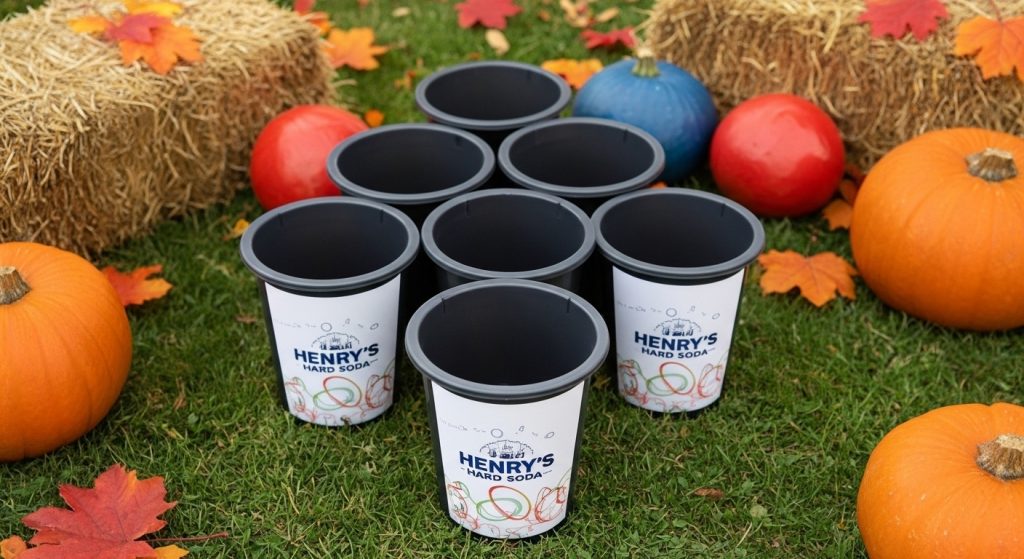
That makes patio-friendly games useful because the activity does not have to pull people away from the environment. Instead, it can add another layer to it. Guests can play while they socialize, watch an event or wait for friends. The game becomes part of the hospitality experience rather than a separate attraction.
Compact formats can work especially well where space is shared with tables and seating. A tabletop activity can occupy a small area. A wall-mounted game can activate a vertical surface. A ring or target game can establish a quick-play station. A larger lawn game can anchor an open outdoor section where there is room to circulate.
The important thing is matching the format to the footprint. An outdoor bar with a small patio should not be planned like a large festival lawn. A large brewery property may be able to support several distinct activity zones. The physical environment should drive the game mix.
For more formats designed around hospitality and open-air environments, explore outdoor bar games and outdoor beer games.
Give People Another Reason to Stay in the Space
05 / Choosing Games for High-Traffic Outdoor Events
Choose the Game Around the Environment
The most visually impressive game is not automatically the right game. Outdoor activations have real physical, operational and environmental constraints.
A useful selection process considers weather exposure, portability, visibility, throughput, storage and branding surface area before the game ever arrives at the venue.
A Simple Planning Framework
Match the Game to the Traffic Pattern
Different outdoor environments reward different styles of gameplay. Thinking about how people enter, gather and leave the space can make the game selection process much more straightforward.
Think visible, competitive formats that can be recognized from a distance and support groups of spectators around the play.
Use social games that can create activity zones without requiring attendees to stop participating in the rest of the event.
Use compact games around tables and larger games where the property has lawn space or dedicated outdoor recreation areas.
Favor formats that fit naturally around hospitality, seating, live events and the flow of customers through the space.
Start with the environment, then choose the game. The physical setting should influence the activity rather than forcing the activity into a space where it does not naturally fit.
06 / Unconventional Outdoor Formats
Not Every Outdoor Activation Has to Stay on the Ground
Once the objective becomes creating an outdoor experience, the category can extend beyond traditional lawn games.
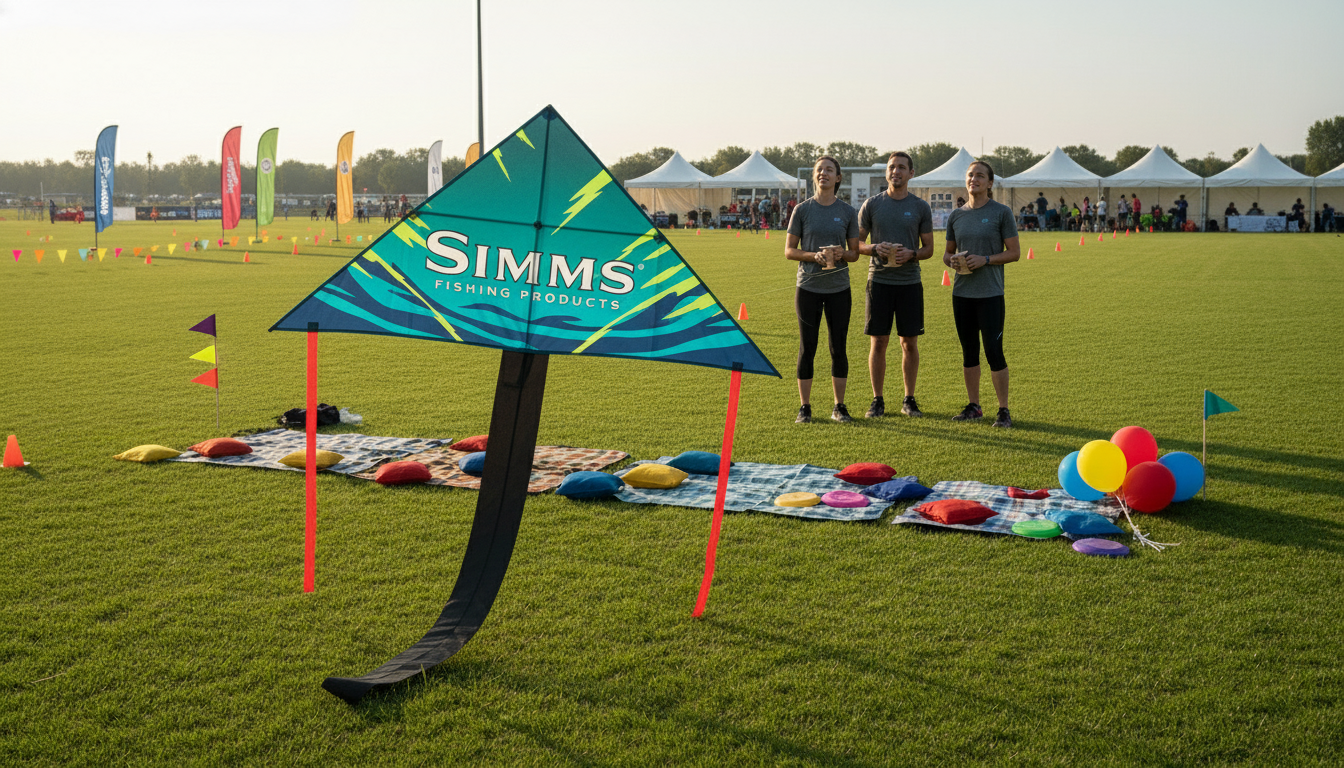
Custom kites with logo are one example of an unconventional promotional format. The product belongs to an outdoor activity, but the branding becomes part of the activity rather than simply being attached to an item being handed out.
That makes the format interesting for outdoor campaigns where visibility, movement and participation all matter. A kite can be a giveaway, an activity element or part of a broader display concept depending on the event.
The larger lesson is more important than the individual product: outdoor brand activations do not have to be built from a predetermined list of conventional promotional items. Start with what people will be doing in the environment and look for promotional formats that naturally belong in that experience.
For additional ideas, explore custom kites with logo.
The strongest outdoor concept may be the product that changes what the audience does in the space, not simply what the audience receives.
07 / Connecting Event Types to the Broader Category
Tailgates, Beer Festivals, Oktoberfest and Outdoor Bars Share the Same Core Idea
These events may look different on the surface, but the underlying activation strategy is remarkably consistent. Each environment already has an audience, a physical footprint and a social rhythm. The branded game becomes the bridge between those existing conditions and the brand’s presence within them.
A tailgate creates competition and fan energy. A beer festival creates discovery and social movement. Oktoberfest creates communal celebration. An outdoor bar creates relaxed hospitality. In each case, a well-chosen activity can give people another reason to gather, participate and associate the environment with the brand.
Competitive, visible games can create branded gathering points before the main sporting event.
Social games can fill the spaces between tastings, entertainment and conversations.
Familiar communal formats can reinforce the festival atmosphere while integrating the brand.
Patio-friendly games can turn downtime, waiting and socializing into additional brand interactions.
Games can become shared activities that support hospitality and customer-focused gatherings.
Interactive formats can create a common activity around which employees, clients and guests can gather.
The broader branded games category makes it possible to think across those applications rather than treating every event as a separate problem.
Let the Game Become Part of the Visual Identity
Brand the Event, Not Just the Product
Make the Game the Branded Touchpoint
A logo on a sign tells people who is sponsoring the space. A branded game can show them what the sponsor is doing in the space.
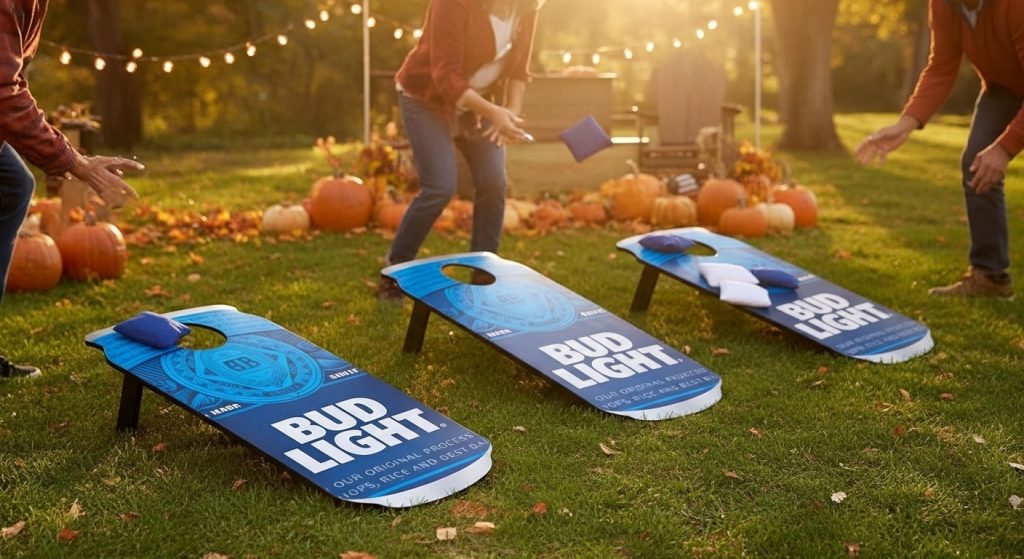
That distinction is subtle, but it changes the visual role of the product. When the branding is integrated into the playing surface or other visible parts of the game, the audience sees the brand while the activity is happening.
That creates repetition without requiring the audience to stop and read another sign. Every turn, toss, shot or move through the game happens inside a branded object.
It also helps create a more coherent activation when several games are used together. Instead of having one branded product here and another unrelated promotional item there, the campaign can establish a visual language that carries across the activity zone.
The result is a more intentional relationship between recreation and branding. The game still needs to be enjoyable and functional, but the presentation makes it part of the campaign rather than a generic activity sitting next to it.
08 / Conclusion — Make the Brand Part of the Event
Do More Than Put a Logo at the Event. Make the Brand Part of the Activity.
The strongest outdoor brand activations do not feel like an interruption to the event. They feel like something the event was missing.
Tailgates, beer festivals, Oktoberfest celebrations and outdoor bars already provide social energy. The opportunity is to identify the activity that naturally fits the environment and then use branding to make that activity part of the experience.
That means choosing games for the actual conditions of the venue. Think about weather, portability, visibility, throughput, storage and branding surface area. Think about where people gather, how they move through the space and whether the game works for one person, two people or a group.
Then think about the role of the brand. The game should not simply be positioned beside the marketing. It can become one of the places where the marketing actually happens.
A tailgate game can create a gathering point. A beer festival game can fill the space between tastings. An Oktoberfest game can reinforce the communal character of the event. An outdoor bar game can turn waiting and socializing into participation. An unconventional format such as custom kites with logo can expand the idea even further.
The objective is not simply to place a logo where people can see it. Build an activity people naturally gather around, play and associate with the brand.
Choose games people can understand and enter without unnecessary friction.
Position the activity where the surrounding audience can discover it and watch it happen.
Give attendees a genuine reason to stop, play, compete and interact.
Make the branded game part of the memory people take away from the event.
Explore the broader branded games category for additional outdoor and event applications.
“Highly Recommend!”
“First time using this supplier and WOW are we happy. We did a self-promo of their Tailgate Cornhole and their Fast Four game. They are beautiful and they arrived in under 2 weeks… to Canada! Ordering was very easy, uploading our very large artwork file was easy, and dealing with them has been a breeze. Jackie, the account manager, is helpful and great to deal with. Highly recommend.”
– A Satisfied Client
“Hidden Gem of a Supplier!”
“I am totally wowed by their customer service. Quick responses, patient artwork services, and much faster than quoted production. I don’t mean to sound arrogant, but it’s rare that a supplier treats us better than we treat our customers. I often have the thought, ‘wow…if I treated my customers this way….’ With this supplier, those same words are going through my head, but I’m thinking we need to step up our game. As I was getting impatient on our 8th round of artwork (we turned it over to them at round 5), they were kind and responsive and just got it done. Hidden gem of a supplier I had no idea existed. Thanks—well done.”
– A Happy Customer
“Fastest Shipping Ever!”
“This is THE supplier for cornhole boards!! Friendly, quick response, and received an art proof the same day. Shipping was FAST and I mean FAST. Received the order two days after placing it. From sending the artwork to customer receiving the product was 4 business days.”
– Thrilled Customer
SPECIAL OFFER
Get your logo mocked-up on ALL of our promotional products and games, for free!
Email us (Promotoss) a logo and we will create a mockup for you. We are a SAGE, asi and PPAI member, please have your vendor numbers available so that we may connect. To receive promotional product mockups, please make sure all fields on contact form are filled. That being said, we do not send spam and will be contacting you for the purpose of direct sales. Your information will not be provided to third parties and it will only trade through a few hands.