

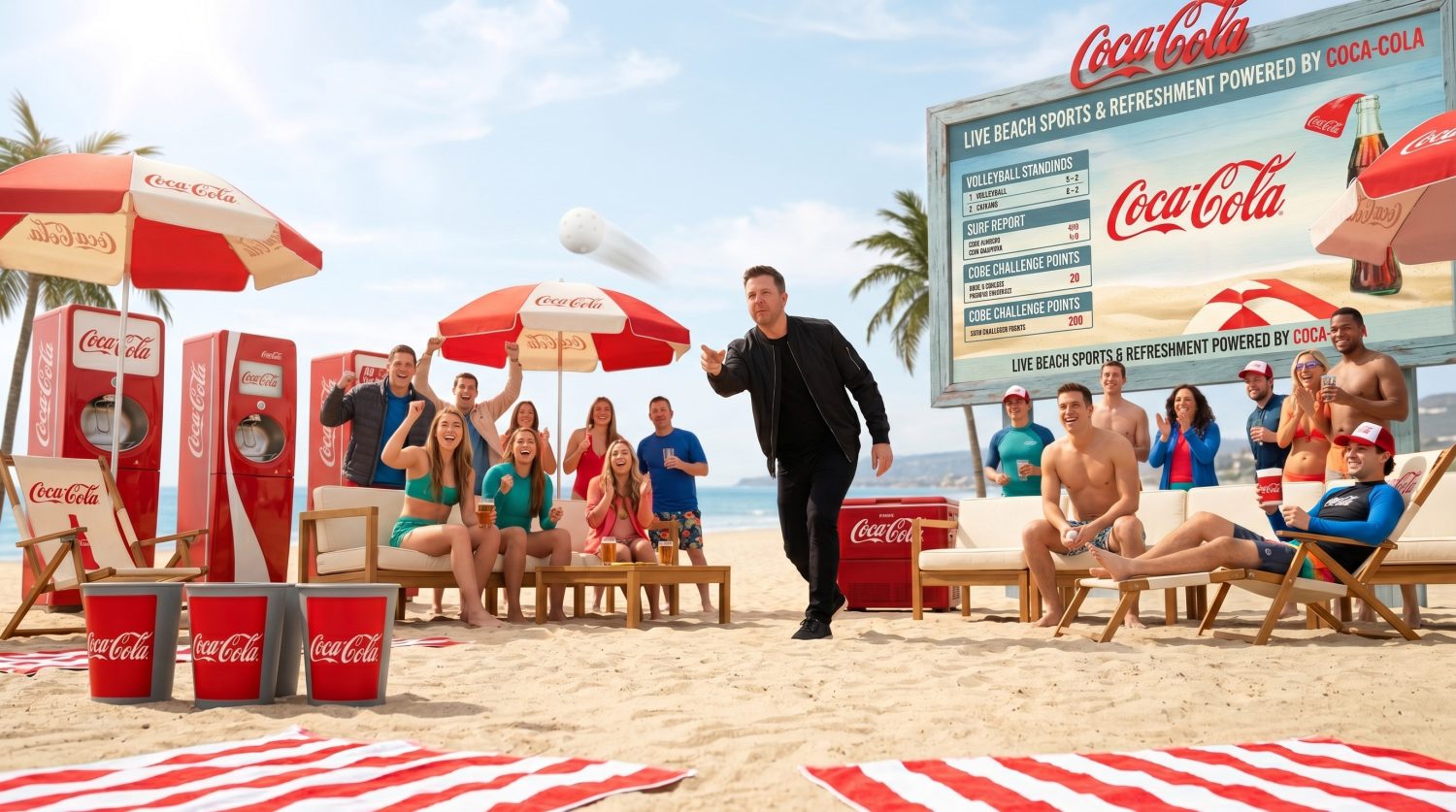
Outdoor Games, Lawn Games & Branded Experiences
From Lawn Games to Brand Experiences: Designing Outdoor Events People Actually Join
Outdoor events create the space. Interactive games give people a reason to use it.
Lawn Games
Brand Visibility
Participation
Start With Participation
Give people an easy reason to join.
Design for the Environment
Think about setup, flow and visibility.
Brand the Experience
Make the game part of the environment.
Add the Promotional Layer
Let prizes support the experience.
Introduction — Outdoor Events Need Participation
Outdoor Events Create the Space. Participation Creates the Experience.
Outdoor environments naturally create opportunities for casual interaction, but the setting alone does not guarantee that people will participate.
A lawn, patio, festival area, tailgate or open hospitality space gives an event room to breathe. People can move around, gather in groups and decide where they want to spend their time. That flexibility is valuable, but it also means that an activity has to earn its place in the environment.
That is where outdoor games become useful as marketing tools. A game gives people an obvious physical invitation: walk over, take a turn, make a play, challenge someone, watch what happens and decide whether to join. The best formats do not require a complicated explanation before participation begins. The visual language of the game does much of the work.
For brands and agencies, this creates a different way to think about outdoor event planning. Instead of treating the game as something added after the layout has already been designed, the activity can become part of the layout itself. Where people walk, where they gather, where food and beverages are served and where the main energy of the event is concentrated all influence how an outdoor game can function within the experience.
That is the difference between simply placing a lawn game outdoors and designing an outdoor brand experience around participation. The game becomes part of the environment rather than just an object sitting in it.
For programs centered on casual social play, backyard adult games can provide a useful starting point, while yard games for adults can help frame the broader category.
What Makes an Outdoor Game Work for Marketing?
Design the Game Around the Way People Actually Gather
An outdoor game has to work as a game first, but it also has to work inside the physical and social conditions of an event.
Easy rules matter because outdoor environments are rarely controlled like a dedicated game room. People may encounter the activity while walking past, talking with friends, carrying food, waiting for something else to begin or joining a group already playing. A format that can be understood quickly makes it easier for a new participant to step into the action.
Quick setup matters for another reason: the game exists within a larger event plan. The space may have to be loaded, moved, assembled, rearranged and eventually packed away. The less friction there is between the game arriving and the game becoming usable, the easier it is to incorporate the activity into a real event schedule.
Visible gameplay is equally important. A game that can be seen from across an outdoor space communicates activity to people who are not yet participating. The movement becomes part of the visual environment, while the physical presence of the game can help define an activity zone.
Multiple participants can add another layer. When a format allows people to play in pairs or groups, one person can become the reason another person stops. That social quality is especially relevant when the goal is not merely an individual transaction but a shared brand experience.
Finally, branding needs to remain visible without getting in the way of the game. The playing surface, visible components and surrounding presentation can all contribute to the brand environment while keeping the activity recognizable and functional.
Participants should be able to understand the basic activity quickly.
The game has to fit naturally into the broader event setup and teardown process.
Movement and activity help the experience read clearly within an open environment.
Group play can turn one participant into a reason for another person to join.
Branding should remain part of the physical experience throughout gameplay.
The game should make sense alongside the event’s traffic, gathering areas and overall environment.
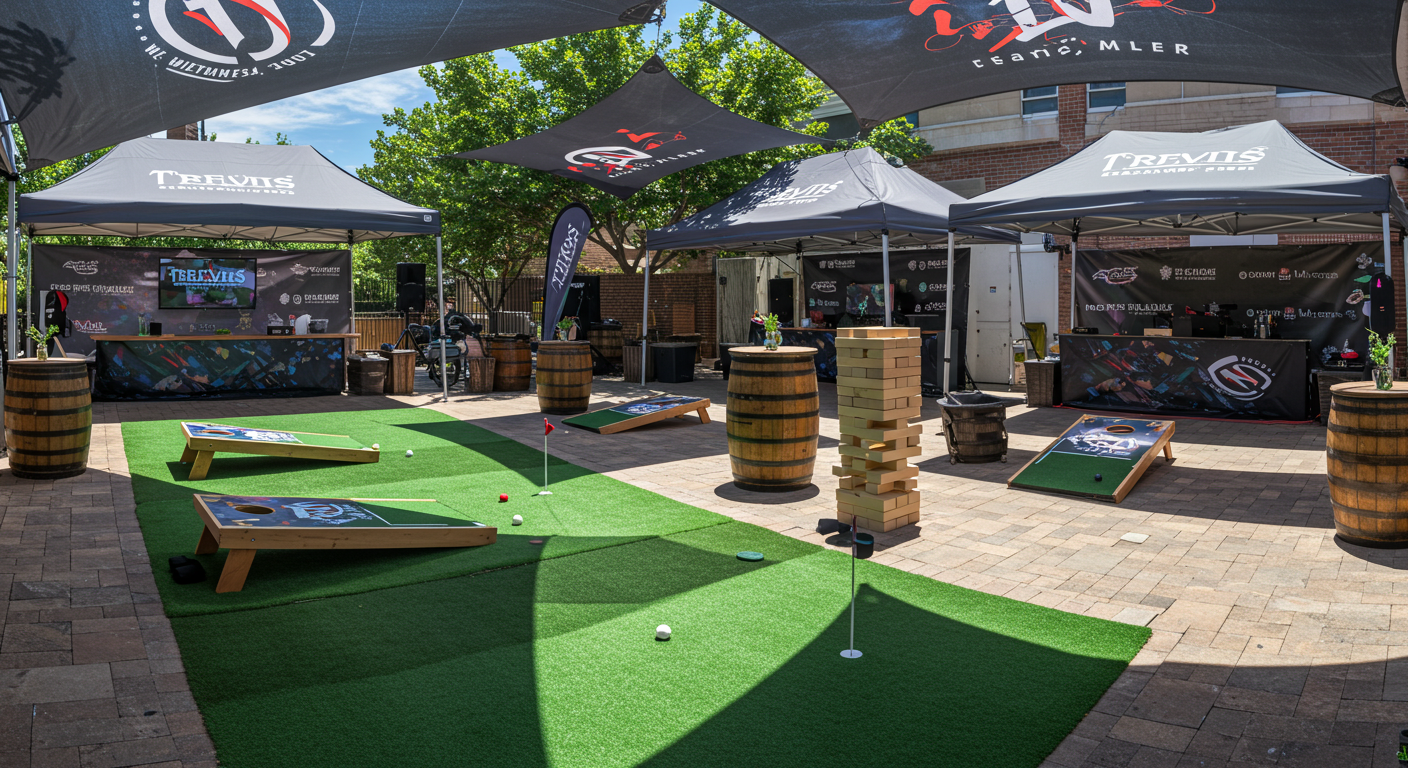
Build the Activity Into the Environment

Turn Recreation Into a Branded Environment
From Yard Game to Branded Experience
Customization Changes the Role of the Outdoor Game
A generic yard game provides recreation. A customized yard game can become part of the communication strategy surrounding the event.
The transition happens when the game is considered as more than a standalone activity. The visual treatment, brand colors, artwork and other customized components can change how the game fits into the environment. Instead of looking like something brought in from somewhere else, the activity can feel intentional to the event around it.
This is particularly useful when the event has a defined identity. A corporate gathering may have a specific visual system. A festival may have a distinctive atmosphere. A sports activation may be built around team or campaign colors. A hospitality environment may call for something more integrated and polished. In each case, the game can occupy the same creative world as the rest of the event.
That is where custom yard games become more than entertainment. They can serve as physical touchpoints that reinforce the identity of the surrounding experience.
The same idea applies to custom yard games designed for corporate events and festivals. The game remains playable, but the presentation becomes part of the environment that attendees are actually encountering.
Think of the outdoor game as part of the event environment first and as a recreational object second. That simple shift changes how it is selected, branded and positioned.
Branding the Experience
Put the Brand Inside the Interaction
The strongest visual connection is often the one that remains visible while the activity is happening.
Branding an outdoor game does not have to mean simply placing a logo somewhere on the product. The playing surface and other visible components can become part of the creative system. The brand can occupy the same physical space where the participant is looking, moving and making decisions.
This creates consistency across an outdoor activation. One game can establish the visual language, and additional activities can continue it. When multiple games share a coordinated treatment, they can read as a unified environment rather than a collection of unrelated promotional objects.
The broader category of brand games is useful for thinking about that ecosystem. A branded game can function as a piece of recreation, a visual element and an interaction point at the same time.
For campaigns requiring a more integrated creative approach, custom branded games allow the experience to be considered as part of the larger campaign rather than as a generic game with a logo added later.
The surface is often one of the most visible parts of the interaction and can carry the central visual treatment.
Game pieces, targets, boards and other elements can contribute to a consistent visual system.
The game can sit alongside signage, furniture, tents, hospitality and other components as part of one branded space.
That broader approach to branded games is also why branding games should be considered a design decision, not simply a decoration step.
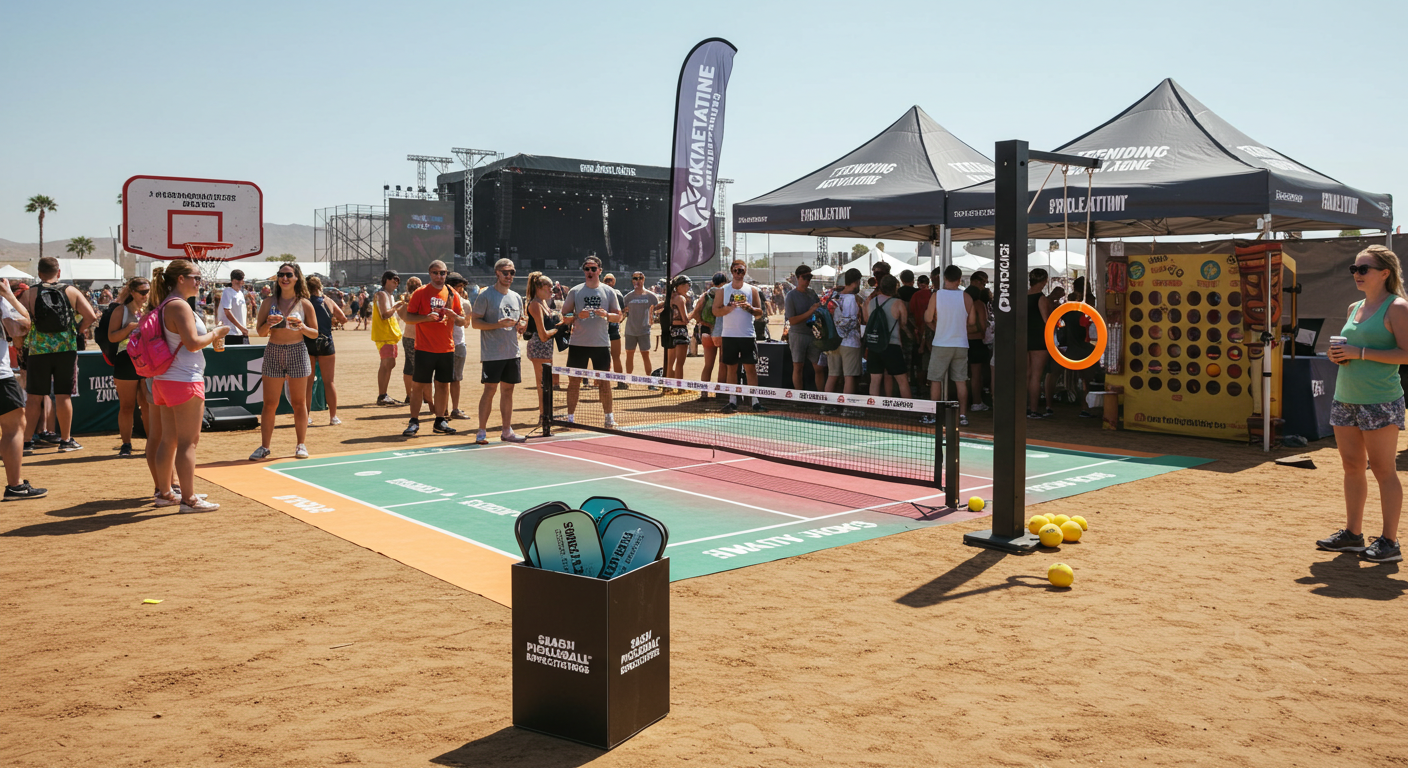
Make the Game Part of the Brand World
Plan the Space Before the Game Arrives
Planning the Physical Footprint
Space Is Part of the Creative Concept
An outdoor game does not exist in isolation. It occupies real space, moves through real logistics and has to work alongside everything else happening at the event.
Start with the physical footprint. How much room does the game require for the equipment itself? How much room is needed for participants to approach, play and move away? Will spectators gather around it? Is there enough clearance for the activity to remain comfortable without interrupting a nearby food service area, stage or primary walkway?
Storage and transportation belong in that conversation as well. Outdoor events can involve multiple locations, repeated setups or a tight event schedule. A game may need to move from storage to a loading area, then into position, then back again. Thinking through that sequence before the event helps the activation remain practical instead of forcing logistics to become an afterthought.
Setup and teardown should be considered with the same discipline. The activation may look effortless to an attendee, but the people responsible for the event still need to know how the equipment gets into place and how it leaves the site.
Placement can then be treated as part of the experience strategy. Games positioned near food, beverages, stages and natural traffic patterns have the potential to become part of the areas where people are already gathering. The goal is not to block those spaces, but to connect the activity to the movement already happening there.
For agencies planning larger promotional programs, wholesale promotional products can be considered within the larger planning conversation around the event’s physical and promotional components.
The Event Has a Physical Rhythm
Think in Terms of Zones, Not Just Products
One game can create a point of activity. Several well-positioned activities can create a larger outdoor environment where people move from one interaction to the next. The planning question becomes less about where to place a product and more about how the experience should flow through the space.
Planning Principle
Make the Physical Layout Support the Interaction
Every outdoor game should have a clear relationship to the space around it, from the approach path to the people standing nearby.
The Prize Layer
Let the Prize Support the Experience
A prize can add motivation to an outdoor game, but it works best when the gameplay remains meaningful on its own.
Outdoor games can become part of a giveaway or promotional reward system in several different ways. A participant might play for a chance at a prize, complete a challenge connected to a promotion or simply receive a reward for taking part. The exact mechanics can change from event to event, but the underlying concept is the same: the promotional layer gives the interaction another reason to continue.
The important distinction is that the prize should support the experience rather than replace it. If the only reason to approach the game is the reward, the activity can feel like a transaction. When the game itself is enjoyable and the promotional element is layered on top, the brand has more room to create an interaction that feels like an event rather than an exchange.
This is where promotional prize ideas can become useful during campaign planning. The prize does not have to dictate the entire design. It can simply give the activity another layer.
That layer can also help organize participation. A simple game may have a clear beginning and end, while a promotional mechanic can encourage people to take a turn, complete a challenge, return for another attempt or watch someone else play before deciding to join.
The game creates the experience. The prize gives the experience another reason to happen.

Use Rewards to Extend the Interaction
Explore Branded Games as a Larger Category
Lawn Games Are One Part of a Broader Branded Game Ecosystem
Lawn and yard games are especially natural for outdoor gatherings, but the larger branded-games category extends well beyond the grass. The same underlying principles apply across different environments: the activity should be understandable, the branding should remain visible and the game should have a reason to exist within the event.
That makes it useful to think beyond one product format. An outdoor campaign might center on a lawn game, then use complementary interactive elements elsewhere in the same environment. The goal is not to make every activation look identical. It is to make every interaction feel intentional.
Lawn and yard formats create a natural fit for festivals, tailgates, hospitality areas and open-air gatherings.
Games can turn otherwise passive areas into places where people actively participate.
A coordinated mix of games can help connect separate parts of an event into one broader environment.
Explore the broader collection of branded games to see how the category extends beyond traditional lawn-game formats.
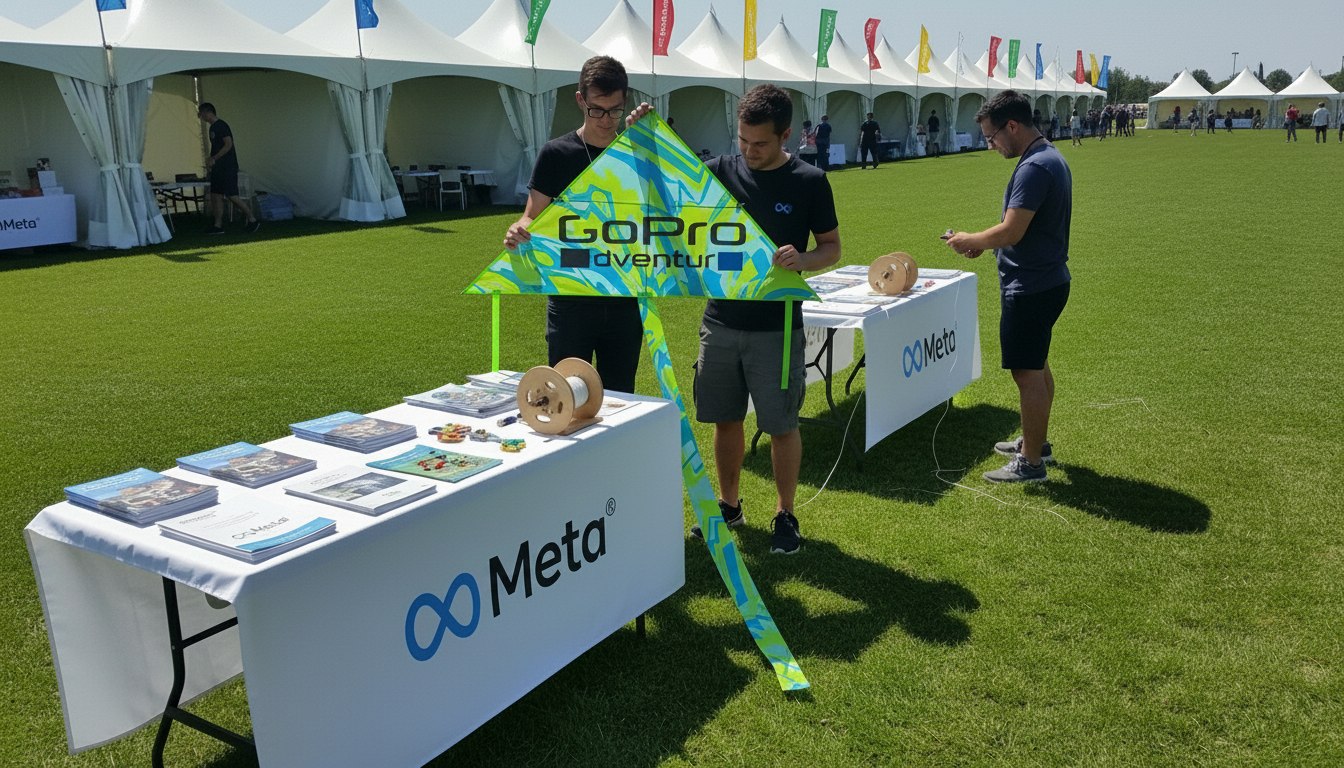
Design for the Way Outdoor Events Are Seen
Beyond the Game Itself
Outdoor Branding Has to Work From Across the Space
Open environments change the way an activation is discovered.
Inside a booth, the visitor is already relatively close to the brand. Outdoors, people may encounter an activity from much farther away. That means the entire physical presentation can contribute to the first impression: the shape of the game, its position, the surrounding activity and the branded elements that make it visually distinct.
This is another reason to think about the experience as a connected environment. A branded game can help establish the activity at ground level while surrounding elements help define the area around it. People do not necessarily encounter an outdoor activation in a single, controlled viewpoint. They see it while approaching, moving past it, standing nearby and deciding whether to join.
The practical takeaway is simple: visibility should be considered at the same time as usability. A game can be easy to play, but the experience also benefits from being easy to discover.
Conclusion
Design Outdoor Events Around Participation
Outdoor games work best when they are treated as part of the event experience rather than as isolated entertainment. The physical setting creates the opportunity, but the activity gives people something to do once they arrive.
That starts with usability. Easy rules, quick setup and a format that supports multiple participants make it easier for people to step into the experience. From there, visibility becomes part of the design. The activity should make sense within the traffic patterns and gathering areas of the event, while the branded treatment keeps the experience connected to the campaign.
Customization then changes the role of the game again. A lawn game can remain recognizable and approachable while becoming part of a larger branded environment. When several elements share a coordinated visual language, the result can feel less like a collection of promotional products and more like one intentional experience.
The prize layer can add another reason to participate, but it does not have to become the sole purpose of the activity. The game can remain the center of the interaction while the promotional reward gives people another reason to take part.
Ultimately, the goal is straightforward: design for usability, visibility, participation and repeat interaction. Start with the way people will move through the space. Choose the activity that fits that environment. Brand the experience rather than simply decorating the object. Then build the promotional layer around the interaction instead of the other way around.
That is how an outdoor lawn game becomes more than a lawn game. It becomes part of the reason people gather, play and experience the brand.
Make the activity easy to understand and easy to enter.
Design the game so it can be discovered within the larger environment.
Give people a reason to stop, play and interact with others.
Create an experience people can watch, revisit and continue participating in.
Explore branded games as a larger category for building interactive experiences across outdoor events and beyond.
“Highly Recommend!”
“First time using this supplier and WOW are we happy. We did a self-promo of their Tailgate Cornhole and their Fast Four game. They are beautiful and they arrived in under 2 weeks… to Canada! Ordering was very easy, uploading our very large artwork file was easy, and dealing with them has been a breeze. Jackie, the account manager, is helpful and great to deal with. Highly recommend.”
– A Satisfied Client
“Hidden Gem of a Supplier!”
“I am totally wowed by their customer service. Quick responses, patient artwork services, and much faster than quoted production. I don’t mean to sound arrogant, but it’s rare that a supplier treats us better than we treat our customers. I often have the thought, ‘wow…if I treated my customers this way….’ With this supplier, those same words are going through my head, but I’m thinking we need to step up our game. As I was getting impatient on our 8th round of artwork (we turned it over to them at round 5), they were kind and responsive and just got it done. Hidden gem of a supplier I had no idea existed. Thanks—well done.”
– A Happy Customer
“Fastest Shipping Ever!”
“This is THE supplier for cornhole boards!! Friendly, quick response, and received an art proof the same day. Shipping was FAST and I mean FAST. Received the order two days after placing it. From sending the artwork to customer receiving the product was 4 business days.”
– Thrilled Customer
SPECIAL OFFER
Get your logo mocked-up on ALL of our promotional products and games, for free!
Email us (Promotoss) a logo and we will create a mockup for you. We are a SAGE, asi and PPAI member, please have your vendor numbers available so that we may connect. To receive promotional product mockups, please make sure all fields on contact form are filled. That being said, we do not send spam and will be contacting you for the purpose of direct sales. Your information will not be provided to third parties and it will only trade through a few hands.