

Special Opportunity:
Custom lifestyle pitch deck with your logo (Over 50 pages!) — FREE.
Trade Show Activations Entertainment: How Interactive Games Drive Booth Traffic, Dwell Time, and Brand Recall
The most effective trade show entertainment is tactile, competitive, and visually obvious from across the aisle. Games create a reason to stop, a reason to stay, and a reason to talk. They also solve a critical exhibitor problem: how to generate meaningful conversations at scale without relying on aggressive sales tactics. Below, we break down how specific promotional games function as high-performance trade show activations, and why these formats consistently outperform traditional giveaways.
 Why Games Outperform Traditional Trade Show Entertainment
Entertainment at trade shows must accomplish several objectives at once. It needs to be intuitive enough that attendees understand it instantly, fast enough to handle foot traffic, and branded enough that every interaction reinforces the exhibitor’s message. Games excel because they compress all three goals into a single experience.
Unlike passive entertainment, games introduce light competition, anticipation, and reward. A spinning wheel, a dropped chip, or a made basket creates a moment of suspense that naturally draws a crowd. Even people who do not participate directly become spectators, absorbing branding while they wait or watch. This layered engagement is what turns a simple booth into a high-traffic activation zone.
 Chance-Based Trade Show Games: High Throughput, Maximum Reach
Chance-based games are among the most popular trade show activations because they are fast, inclusive, and scalable. Products like the Trade Show Prize Wheel and Drop to Win Game allow nearly any attendee to participate regardless of age, skill level, or physical ability.
Prize wheels are especially effective near aisle edges, where the sound and motion of the wheel naturally attract attention. Each spin becomes a visual signal that something is happening, pulling in nearby traffic. When prizes are tiered—ranging from small giveaways to premium rewards—the wheel also creates repeat engagement and longer lines, both of which increase perceived booth value.
Drop-style games amplify this effect. Watching a chip bounce unpredictably through pegs builds anticipation, while branded panels and backboards ensure logos are visible in every photo or video captured. Variants like the Light-up Drop To Win and Lit, Mini Drop to Win add LED elements that increase visibility under convention hall lighting, making them ideal for large expos and dimly lit venues.
These games also integrate seamlessly with lead capture. QR codes, badge scans, or short forms can be required to play, turning entertainment into a measurable marketing funnel without disrupting the attendee experience.
 Skill-Based Games: Competitive Energy That Sparks Conversation
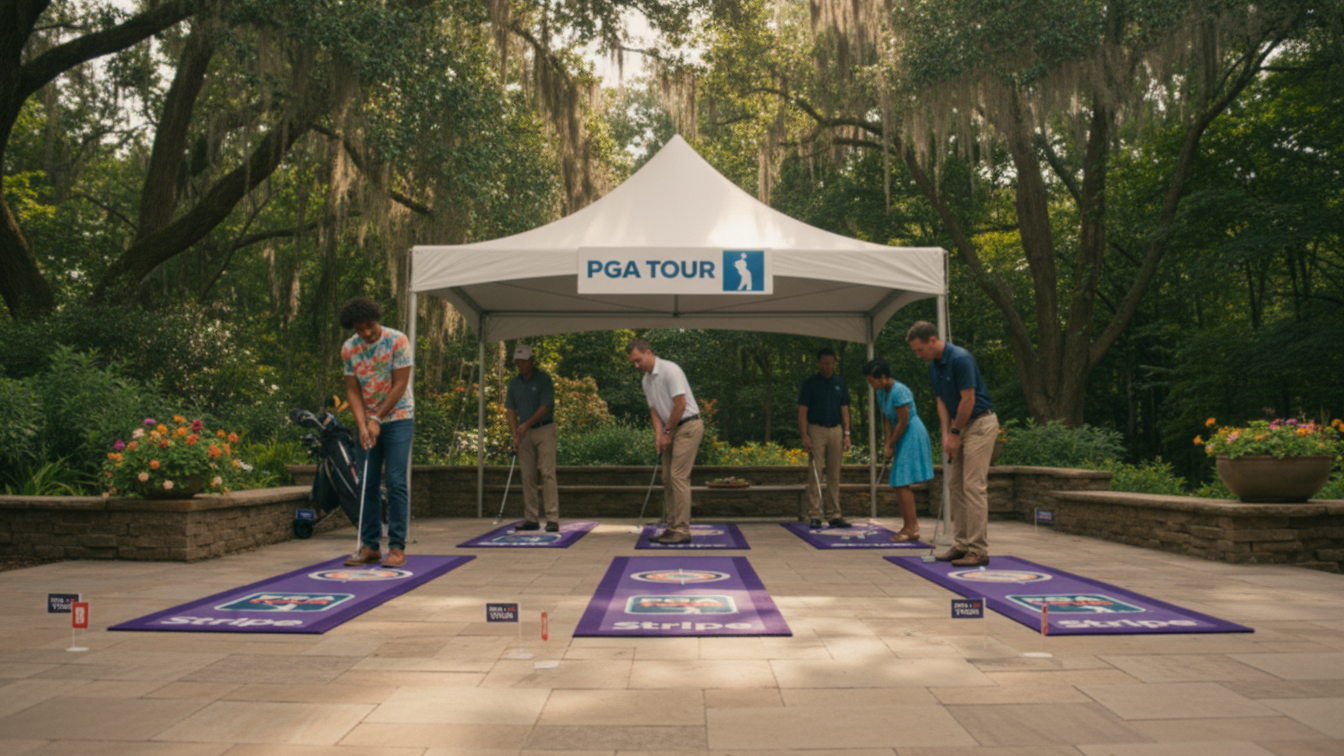
Skill-based activations introduce a different dynamic. Instead of pure chance, games like the Putting Mat / Mini-Golf, Prize Putt, and Branded Basketball Hoop tap into friendly competition and personal pride.
Indoor putting greens are particularly effective at trade shows because they balance speed with focus. A single putt is quick enough to keep lines moving, yet deliberate enough to slow the interaction and encourage conversation. Branded turf, backboards, and hole surrounds keep logos directly in the participant’s line of sight during the moment of concentration.
Basketball hoops add kinetic energy to a booth. The sound of a bouncing ball and the motion of repeated shots draw attention from across the floor. When scores are tracked or leaderboards are displayed, the game becomes a social magnet, encouraging attendees to return later to beat a high score or challenge colleagues.
Skill games work especially well for brands that want to emphasize performance, precision, or improvement. They naturally open the door for product demos, storytelling, and longer sales conversations once the game concludes.
 Hybrid & Novelty Games: Standing Out in Saturated Exhibit Halls
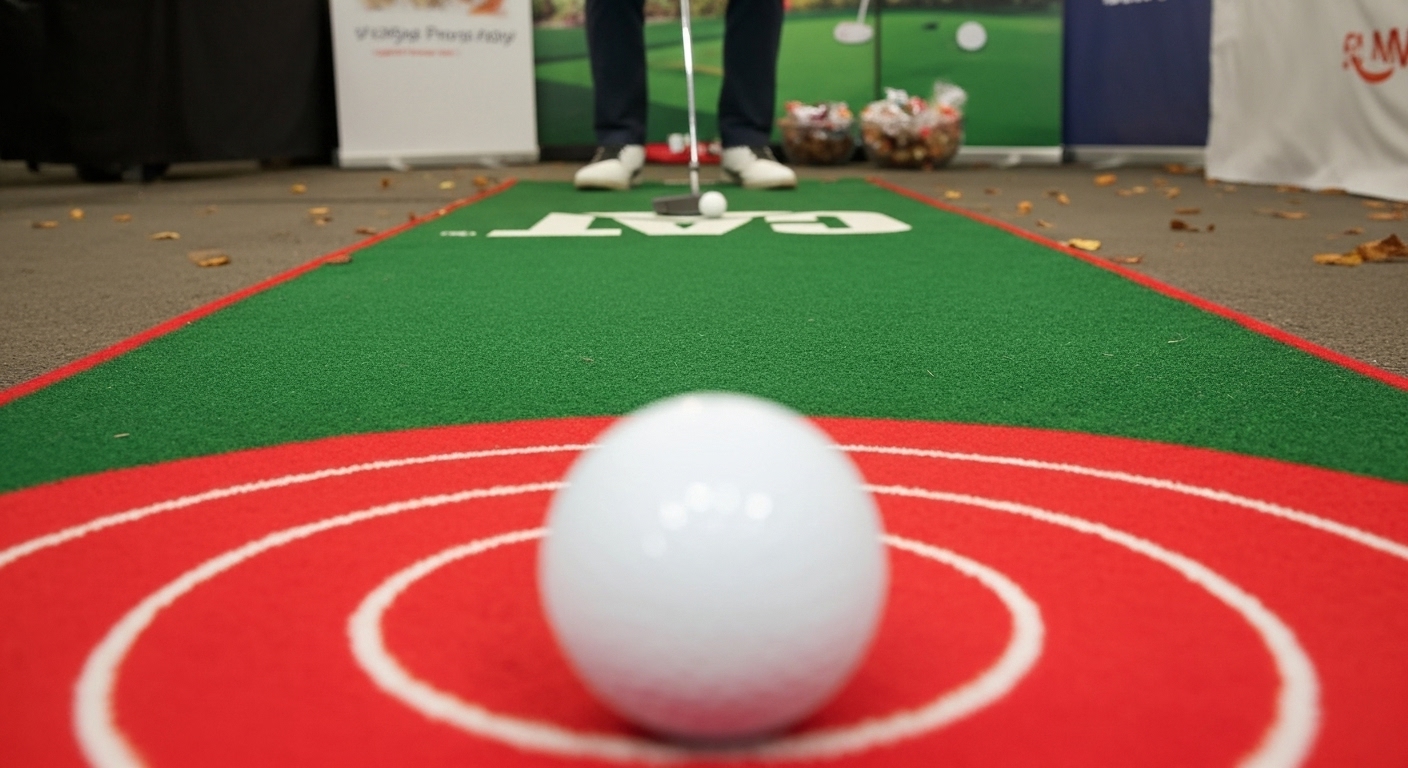
In highly competitive trade shows, novelty matters. Games like Curling Golf, Shuffle Golf, and Tabletop Curling introduce formats that feel unfamiliar yet intuitive.
These hybrid games combine elements of well-known sports with simplified mechanics, making them easy to understand while still feeling fresh. Because many attendees have never seen these games before, they generate curiosity-driven engagement. People stop not just to play, but to ask questions—creating natural openings for booth staff to explain both the game and the brand behind it.
From a branding perspective, these formats offer large, flat surfaces for graphics and messaging. Mats, lanes, and targets can all be customized, ensuring that every play reinforces brand identity while delivering entertainment value.
 Comfort as Entertainment: The Strategic Role of Branded Seating
Not all trade show entertainment involves active play. Comfort-based activations, such as the Wood Sling Chair (Custom Beach Chair), serve a different but equally important function. In large convention centers, fatigue sets in quickly. Offering a place to sit instantly increases dwell time and goodwill.
Branded seating creates micro-lounges within a booth, encouraging attendees to pause, recharge, and engage in longer conversations. These chairs often become informal meeting spots, where sales teams can conduct relaxed discussions away from aisle congestion. Because the branding remains visible while attendees sit, the impression time per visitor increases dramatically.
Seating-based activations also pair well with nearby games. While one group plays, others rest and watch, creating a layered environment where entertainment, comfort, and branding work together.
 Casino-Inspired Engagement: Poker Chips and Gamified Giveaways
Casino-style elements remain powerful tools for trade show entertainment. Products like Trade Show Poker Chips introduce familiar mechanics that feel playful yet structured. Chips can be earned through participation, demos, or conversations, then redeemed for prizes or entries.
This system gamifies the entire booth experience, encouraging attendees to engage with multiple touchpoints rather than a single interaction. It also supports multi-sponsor or multi-product storytelling, as different actions can earn different chip values.
 Final Thoughts: Entertainment as a Trade Show Growth Strategy
Trade show activations for entertainment are no longer optional add-ons; they are core components of high-performing exhibit strategies. Games like prize wheels, putting greens, basketball hoops, drop-style games, and hybrid sports formats consistently drive higher traffic, longer dwell times, and stronger brand recall than static displays.
When designed correctly, these activations become repeatable assets that can be deployed across multiple shows, regions, and audiences. Rather than giving away budget on forgettable items, brands that invest in interactive entertainment create experiences that attendees remember, photograph, and talk about long after the show floor closes.